Neighbour Books
A communal library for your neighbourhood — find, swap, sell, and give away used books within walking distance.
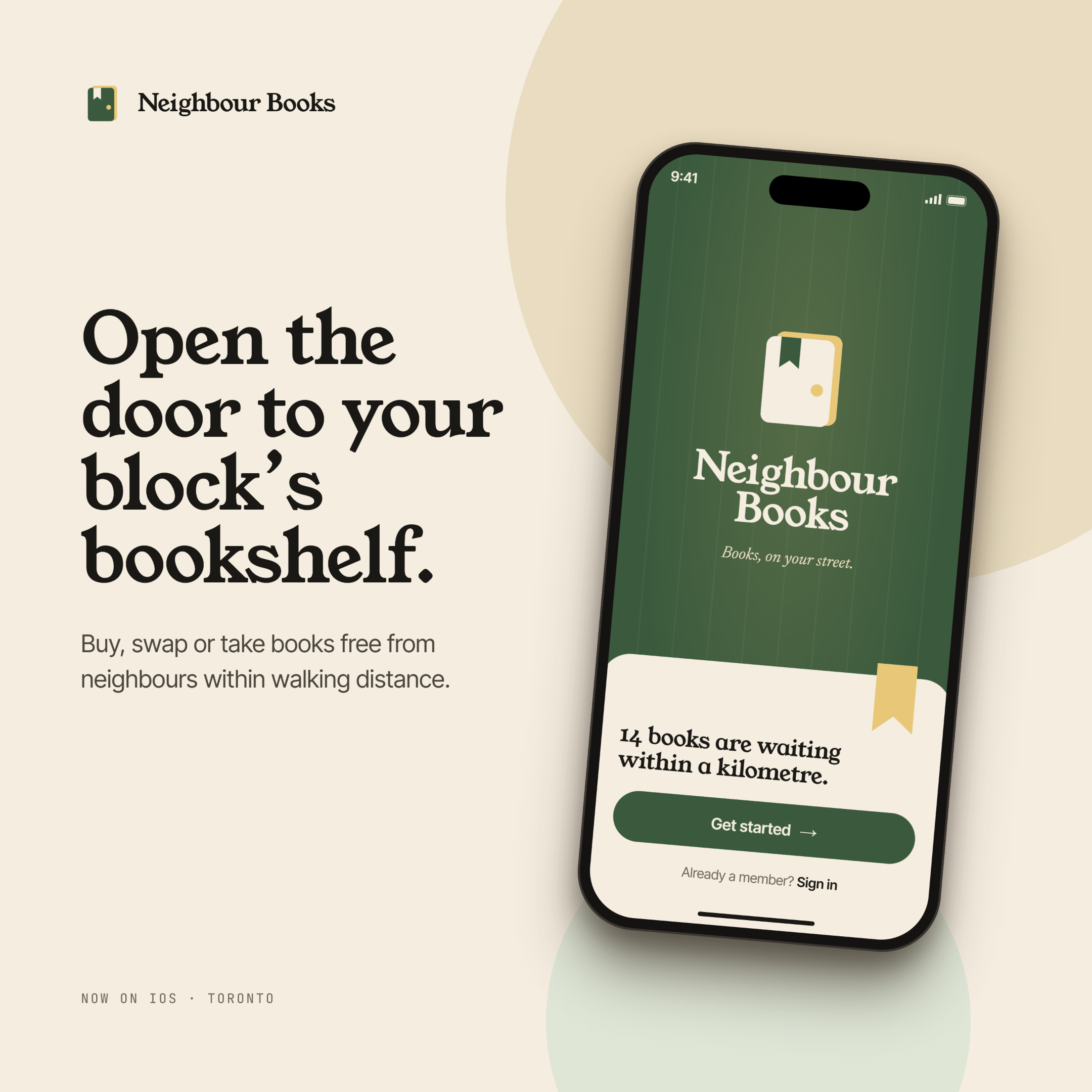
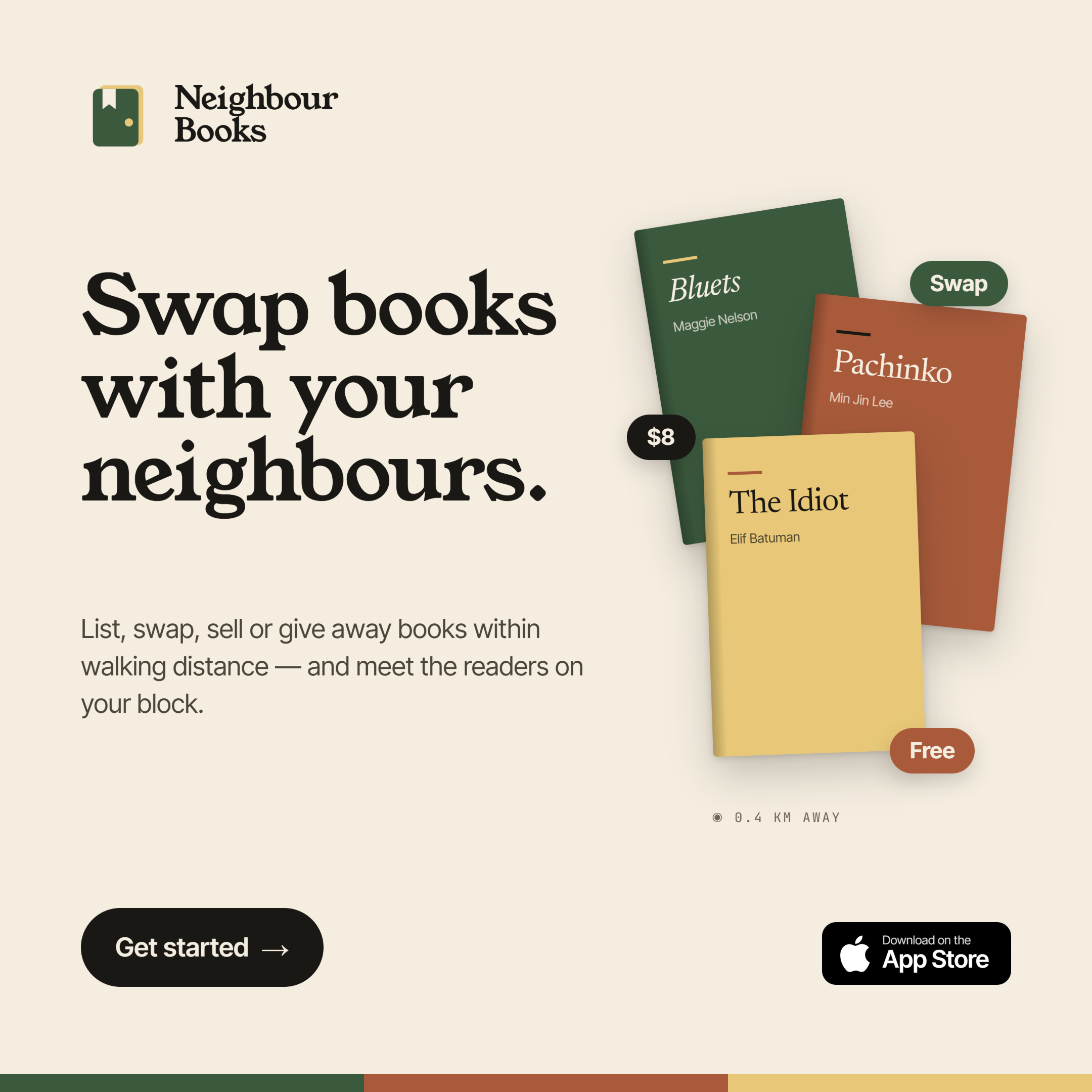
Reading is one of the easiest things to have in common with a stranger, and second-hand is the least expensive way to keep doing it. Nobody had built the place where those two meet.
People already lend books to their neighbours. Sustainability already pushes them toward second-hand. This project asks what happens when you give a habit people have anyway somewhere proper to live.
A scavenger hunt, every time
Thrift stores and general marketplaces bury books under everything else. Without real filtering, finding one specific pre-owned title turns into a hunt most people give up on.
Books, filtered by proximity
One place to find, trade, sell, or buy used books nearby — so the search gets shorter and you meet the person three streets over while you're at it.
Three things at once
Research
02 — what I needed to knowI surveyed seven people at different life stages — students, young professionals, and people not working at the time. Open-ended questions about what they'd tried, what annoyed them, and what they'd never do again.
On every line below
What do you think of an app that lets you buy, sell, or swap books with people in your area — does it build community?
A:Most saw it as a way to meet people who read the same things, and to trade without a shipping label.
Any concerns or problems you'd expect an app like this to run into?
A:Privacy risk, empty shelves in month one, and meeting a stranger in a parking lot.
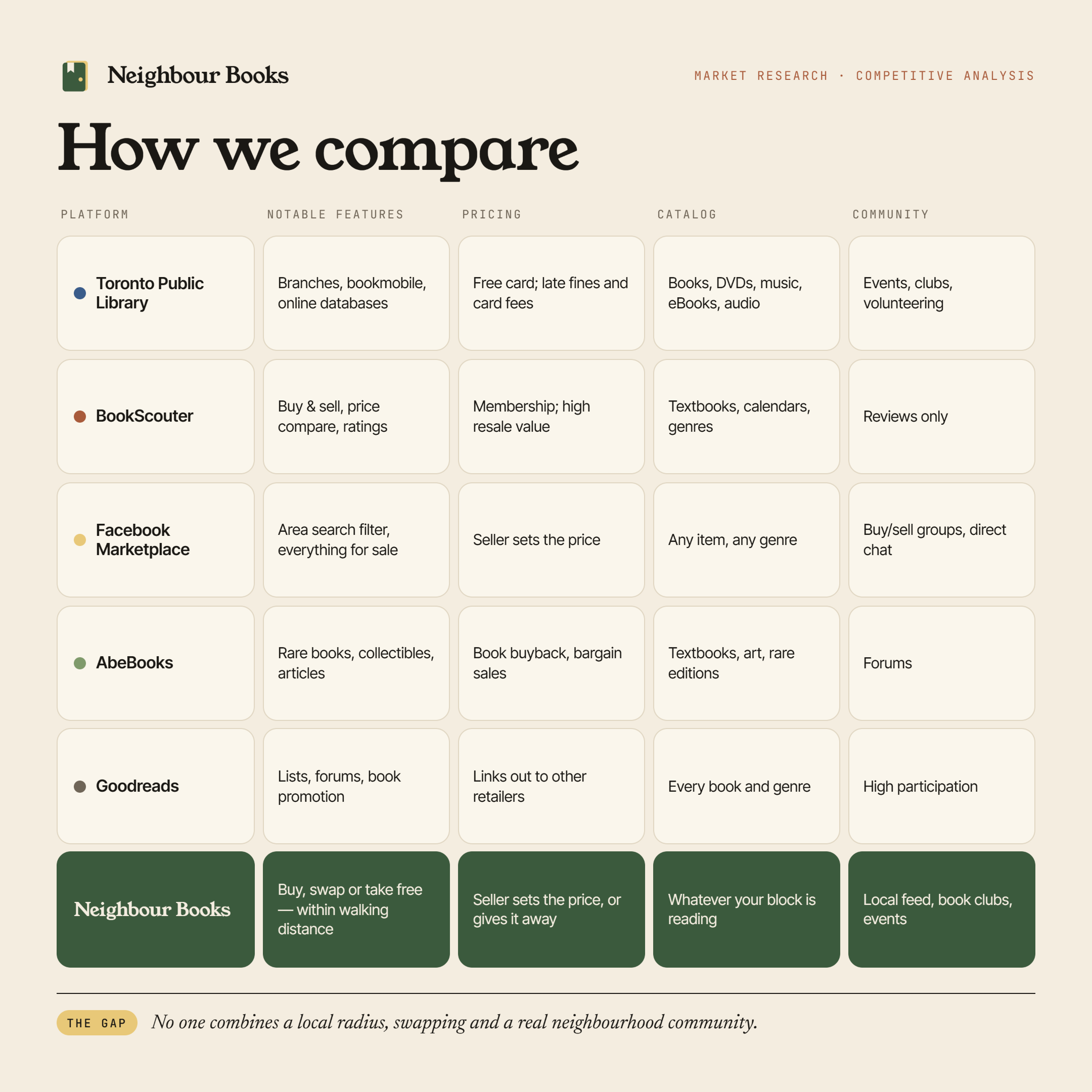
Ideation
03 — concept, name, featuresThe name had to do the explaining. Neighbour Books — local exchange and community bonding in two words, before you've opened anything.
From there the whole app had to demonstrate six things: accessibility, ease of use, community and social, clear communication, reliable information and reviews, and tailored content. Every screen got measured against that list.
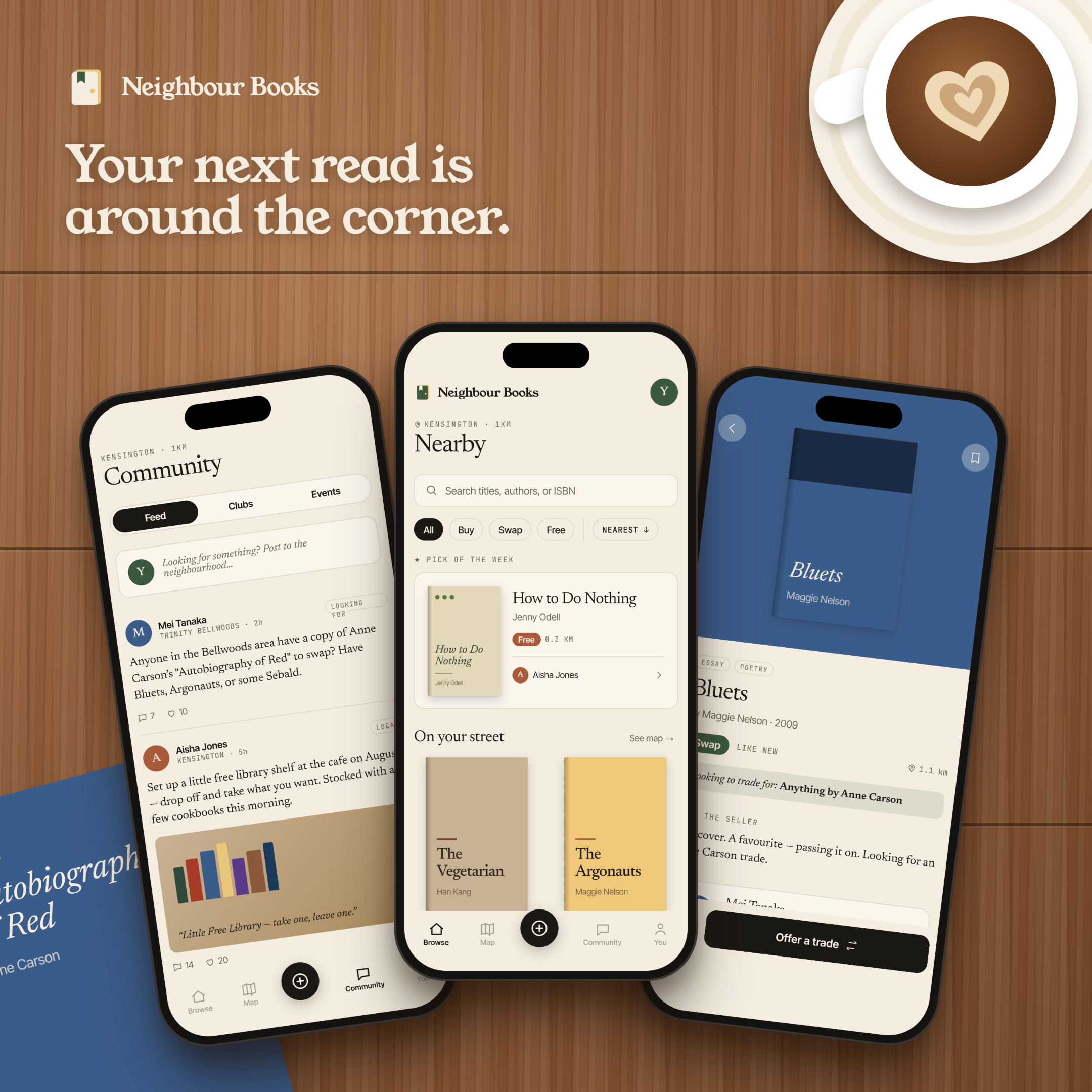
The app
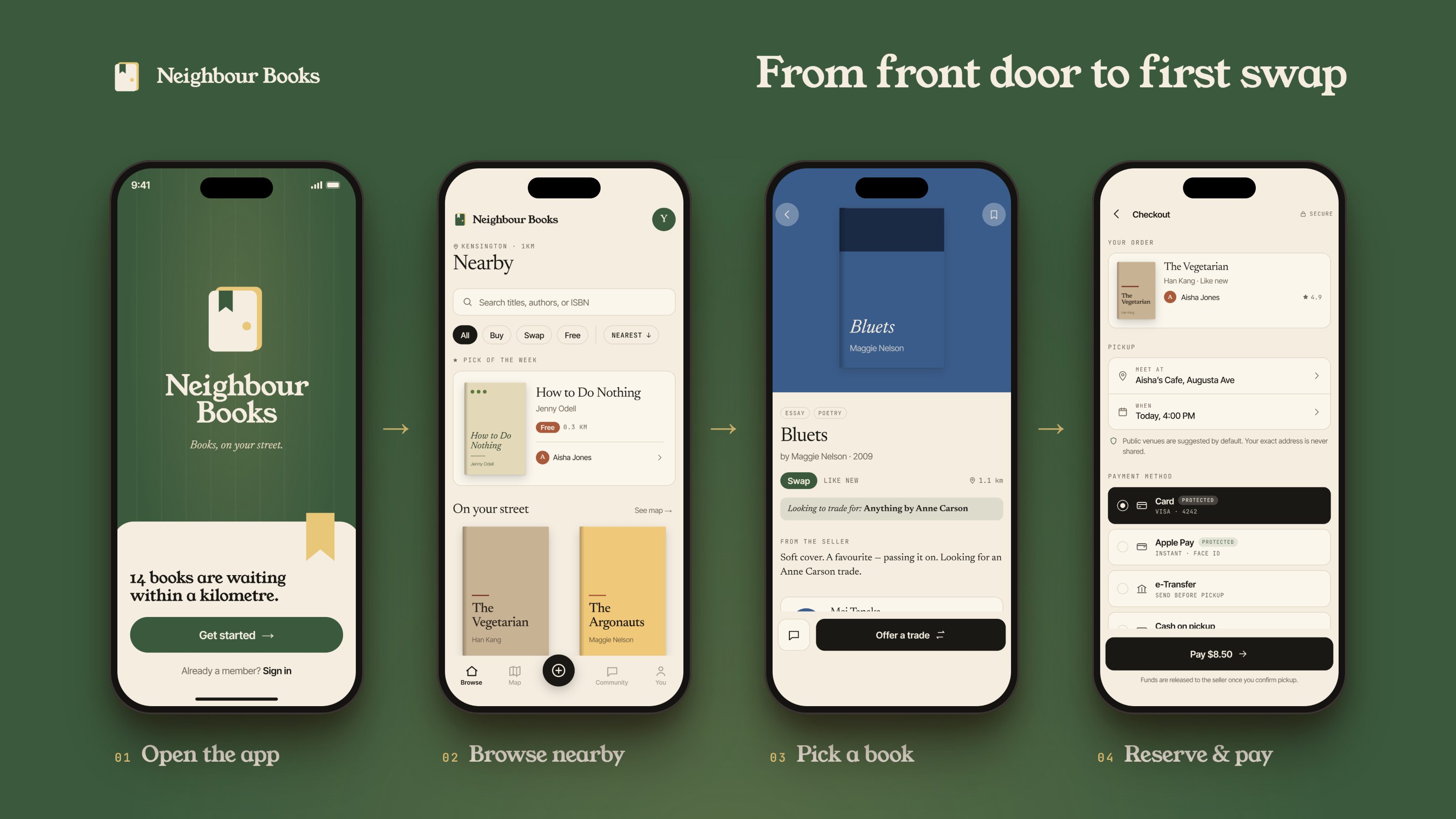
04 — prototypeSign up
Three onboarding screens, then you're in. Set your neighbourhood once and the app sizes your radius to walking distance. Anyone who wants to look before committing can skip straight to browsing.
Search
Nearby opens sorted by distance, not price. One search bar takes titles, authors or an ISBN, and Buy, Swap and Free filters narrow it with a single tap. A weekly pick and an "On your street" shelf give you somewhere to start when you don't know what you want yet.
Listing
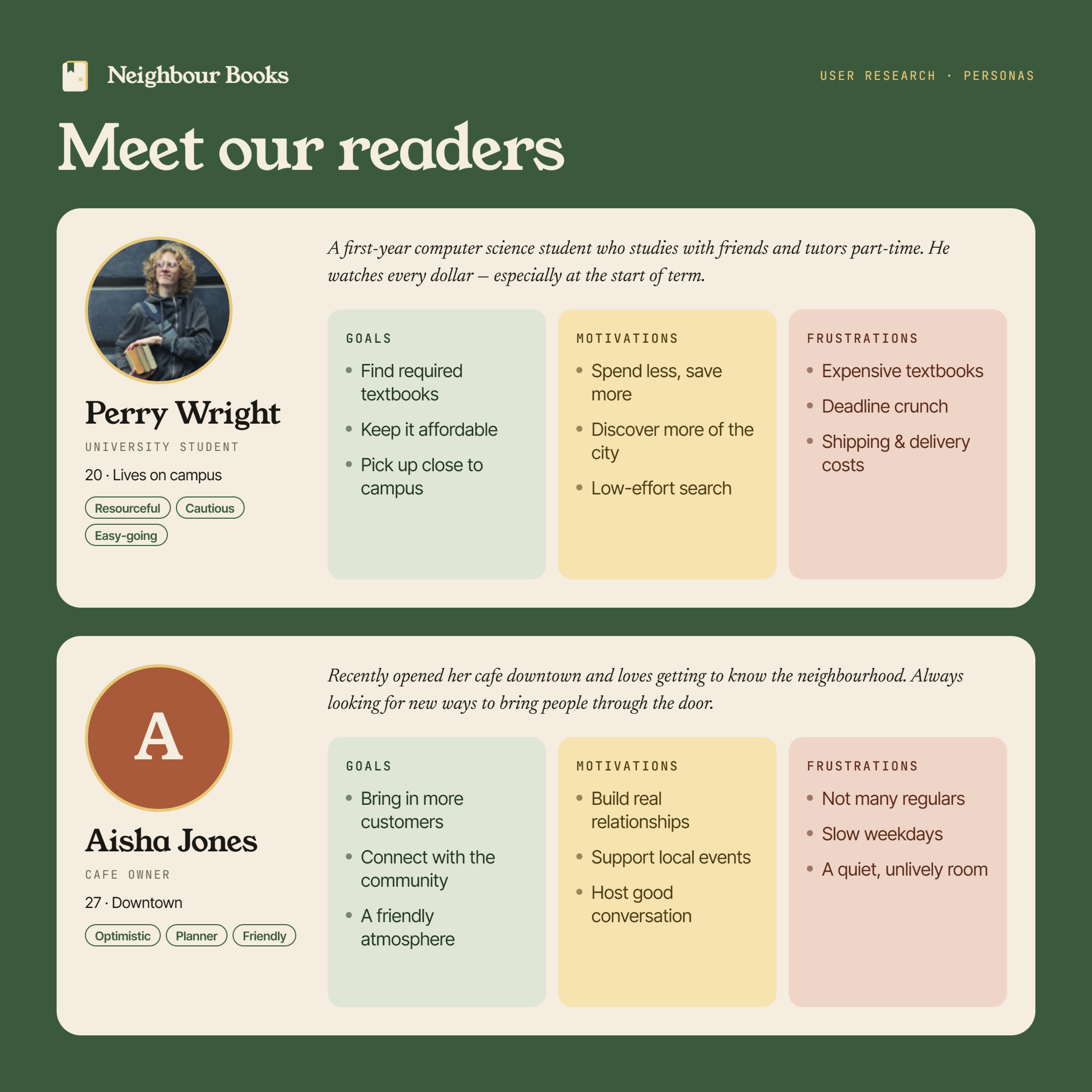
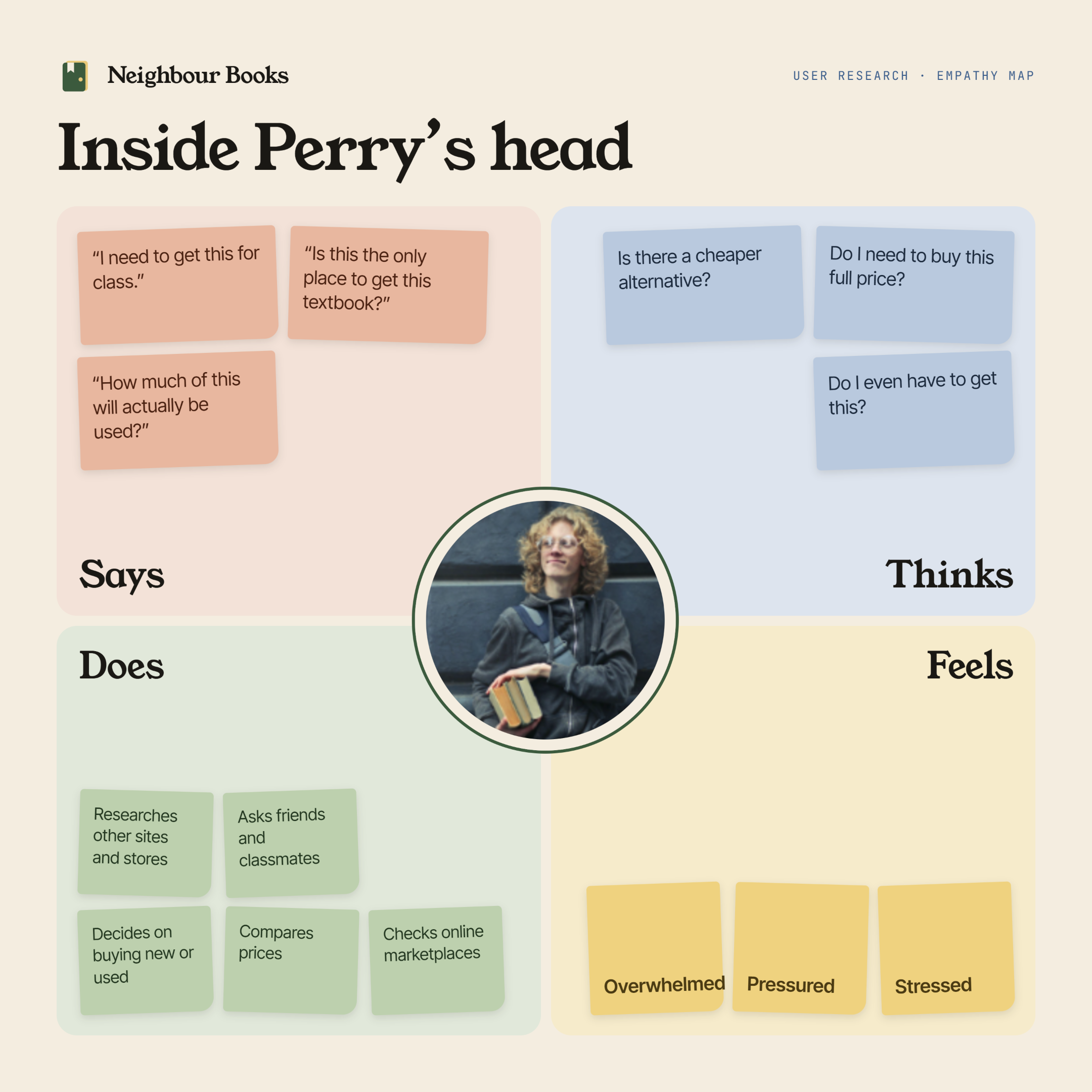
Each book page answers what Perry asked first: what condition is it in, how far away is it, and what does the owner want for it. Swap listings say what the seller is hoping to trade for, so "Offer a trade" is a real offer, not a cold message.
Community
A local feed for requests, little free libraries and recommendations, with clubs and events alongside it. This is the part built for Aisha: a reason for neighbours to meet, and a way to bring readers through her cafe door.
Try the prototype
InteractiveThis is the working app, not a picture of it. Tap around the way Perry or Aisha would.
Browse what's nearby, open a listing, offer a trade, and check the community feed. Everything inside the phone is clickable, and it works with a keyboard too: Tab moves through it and Enter opens things.
- 01Tap Skip (or Get started) to reach Browse, then pick a book from "On your street"
- 02Open a listing and try "Offer a trade"
- 03Switch to Community to see clubs, events and the feed
Outcome
05 — what worked, what didn'tThe goal was a straightforward place to find and give away books for almost nothing — with location deciding what you see, for listings and community posts alike.
The honest conclusion: this audience wants convenience and safety before anything else. Earn those two and the connection people say they want becomes possible. Skip them and no number of community features will rescue it.
I designed the community page before I had evidence anyone wanted it.
The survey said 57.1% of participants don't feel connected to a community, and I read that as demand for community features. They may just as easily have wanted a book app that got out of their way. I would test the swap flow on its own first, and only build the community layer once people came back a second time without being asked.