TVO Kids
A science and engineering platform built to pull girls into STEM — and the project management that had to hold five stakeholder groups together to ship it.
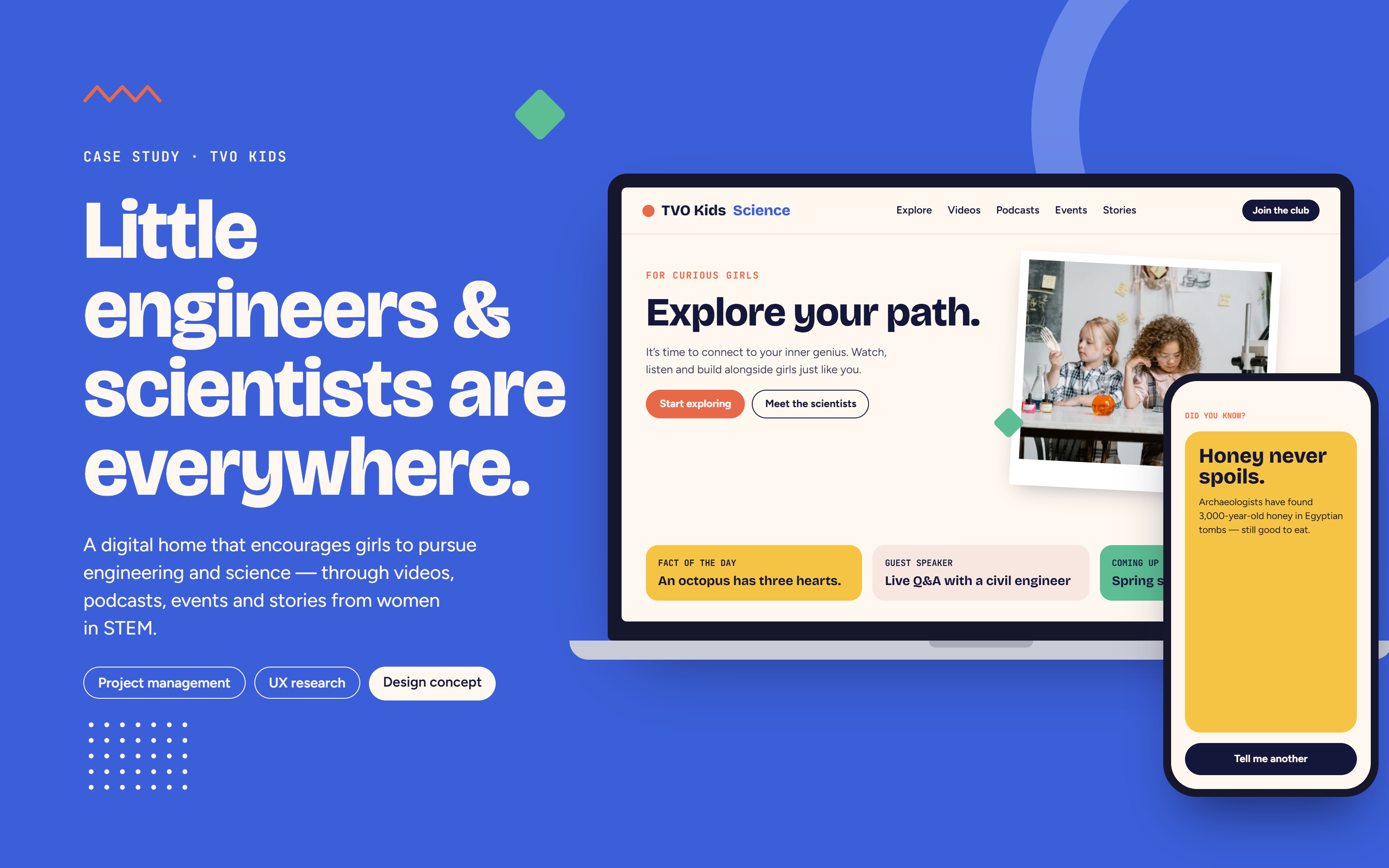
TVO programmes for every age — documentaries, current affairs, children's programming, and classroom resources. Its flagship, The Agenda with Steve Paikin, runs from politics to science to culture.
This project sits in the children's half of that: a digital product meant to get girls into engineering and the sciences. The design matters, but how the project is run is what decides whether it ever ships.
A new product, and no map
TV Ontario wants a digital product that gets girls into engineering and science. That brief doesn't tell you what to build. Running the project well is what turns it into something you can actually hand over.
Find what actually motivates them
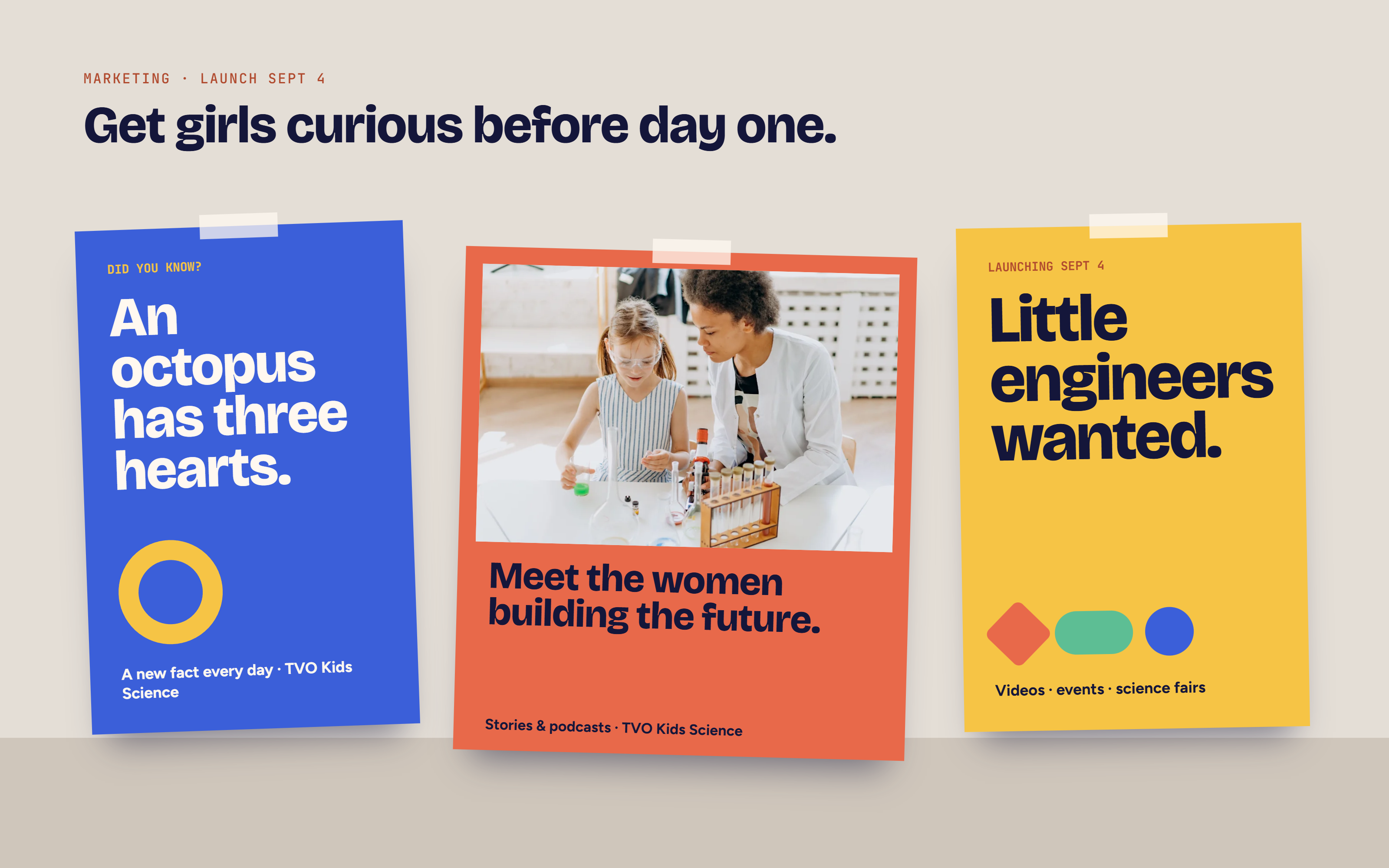
Find out what actually motivates girls, then build the platform around that: science and engineering topics, videos, podcasts, events, and stories from women already doing the work.
Two audiences, one build
How do you build something a ten-year-old wants to use, that also proves its worth to the people funding it?
Who has a say
01 — stakeholders& TVO Kids teamBuild it, run it, and keep the schedule honest.
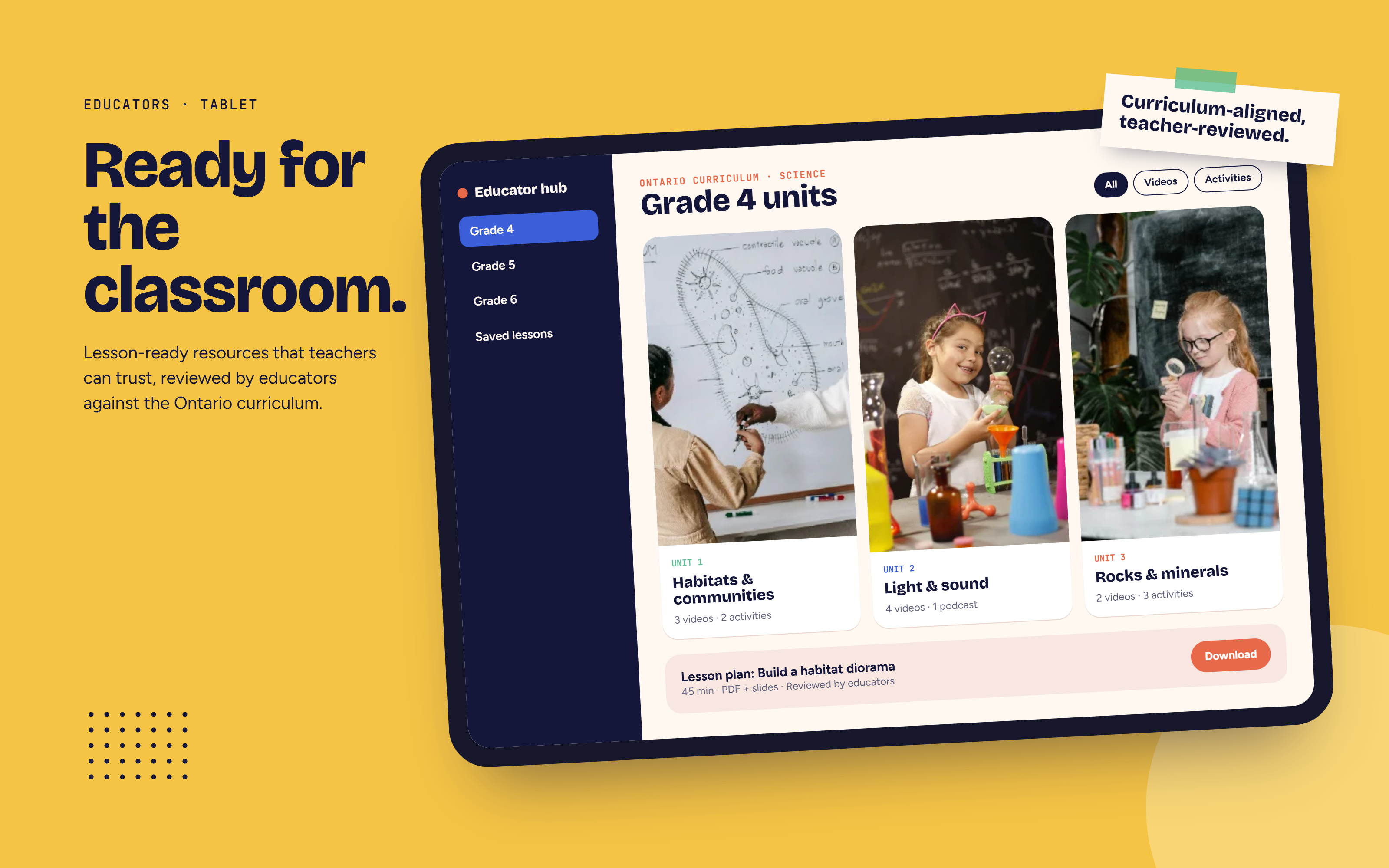
Five groups, five definitions of success. The job was to collaborate closely enough with all of them that the site serves every one — not only the group in the room most often.
Pitching the research
For stakeholdersResearch you can watch. A ninety-second pitch beats a forty-page report.
The motion piece turns the background research into something stakeholders can feel: who the platform is for, what gets in girls’ way, and how videos, podcasts, events and real women in STEM answer it. It was built to win support in the room. Educators, funders and the TVO team could see the idea working before committing budget, and it doubles as the first piece of marketing for launch.
Initiation, planning, execution
The kickoff sets everything: scope, assumptions, content, strategy, objectives — and the constraints you'd much rather hear about now than in month three.
Initiation
Scope and kickoff. Agree what this is, who it's for, and what would count as done.
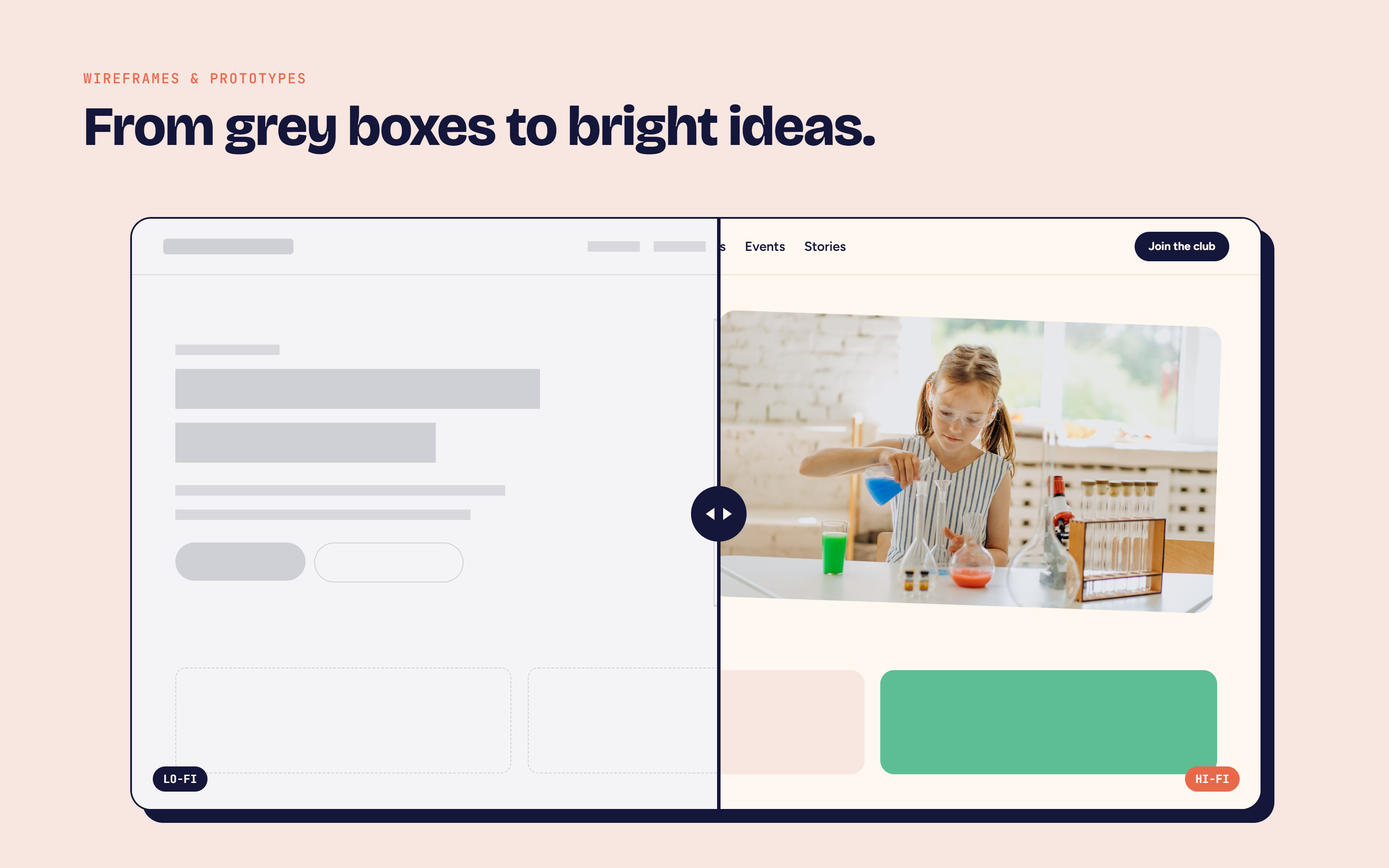
Planning
Turn the scope into a schedule, a content plan, and a review loop each stakeholder group actually fits into.
Execution
Build, test with children, review with educators, and update the plan as reality argues with it.
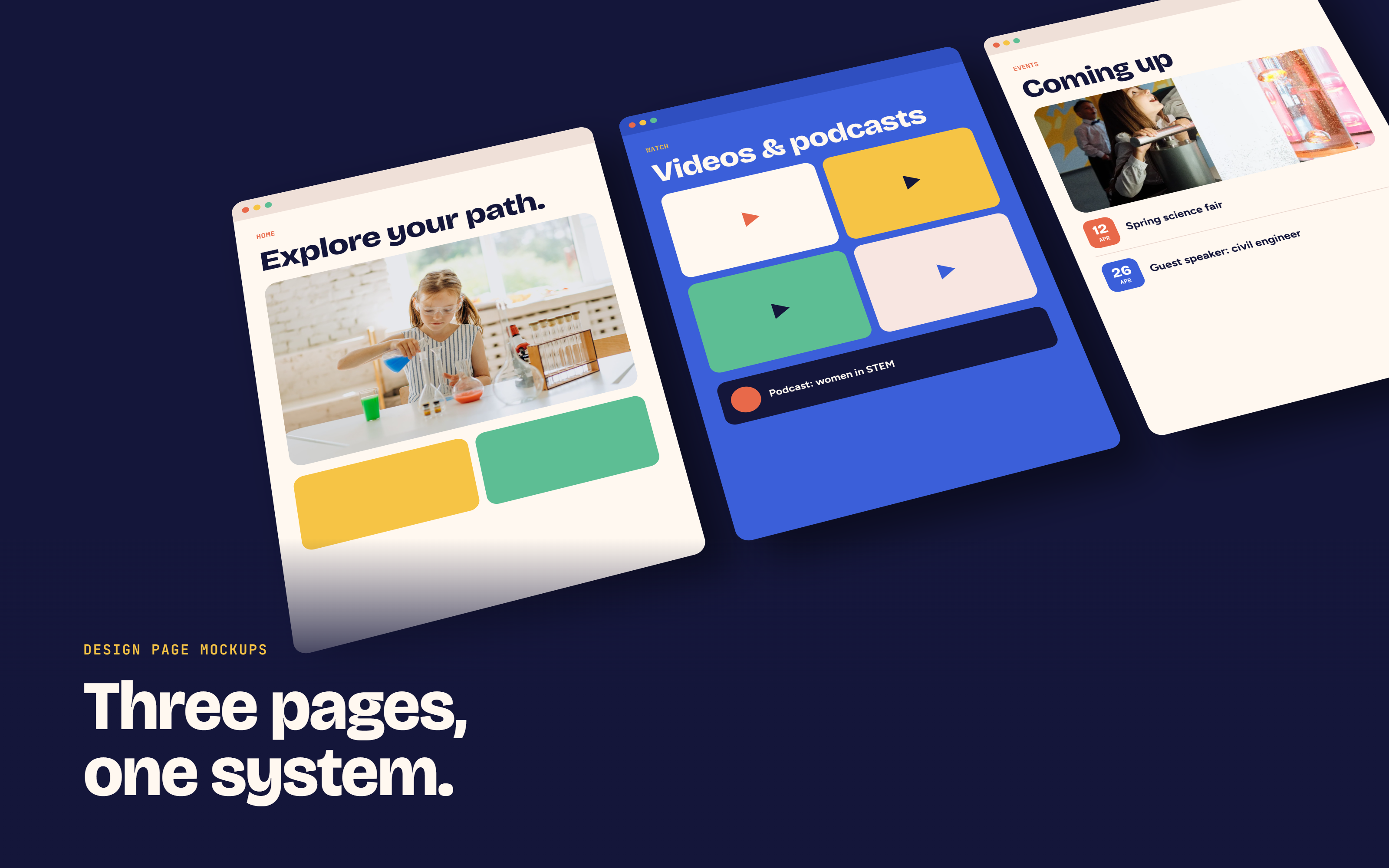
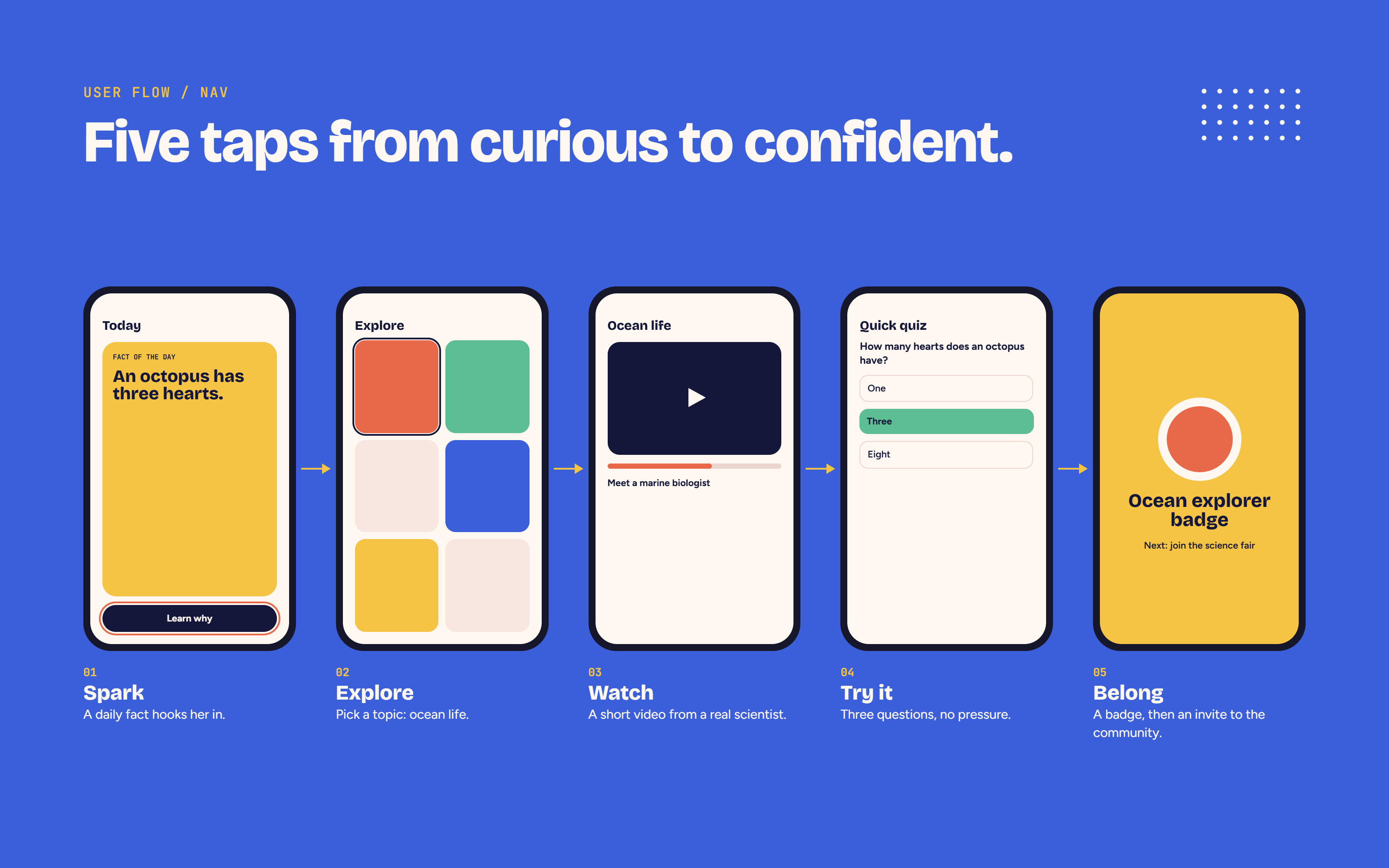
Topics, videos, podcasts, events — and women in STEM telling their own stories.
The last one carries the most weight. You can teach engineering from a curriculum, but what makes a ten-year-old believe it's for her is watching someone who looks like her already doing it.
Five stakeholder groups, and I gave all of them the same review cadence.
Educators needed to see content early and once, against the curriculum. Children needed to see screens late and often, because their feedback is only useful on something that works. Treating those two groups identically cost a full round of revisions that better sequencing would have avoided.